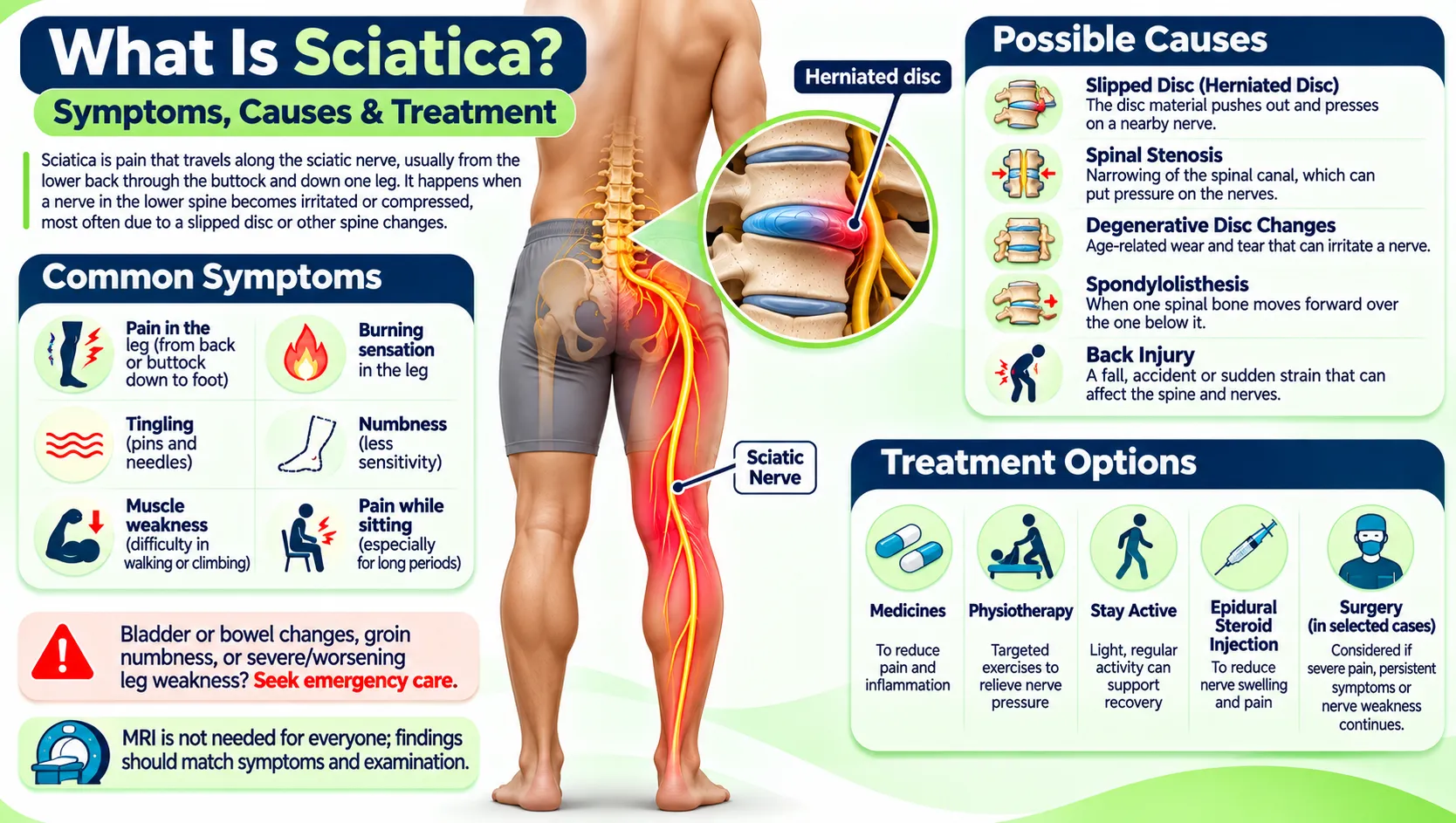
The sciatic nerve stands as the longest and thickest nerve in our body. Sciatica shows up as pain that starts in the back and travels down the leg. Patients might experience sudden pain or notice it gradually developing over time. Various factors like a herniated disc, improper sitting habits, pregnancy or injury can trigger sciatica pain. The good news - the majority of sciatica patients recover without surgery.
What Is Sciatica?
The sciatic nerve begins in the lower back, passes through the buttock and runs down the back of each leg towards the foot. It is the longest nerve in the body.
Sciatica develops when one or more nerve roots that form this nerve become irritated or compressed. The pain can travel from the lower back into the buttock, thigh, calf and sometimes the toes.
It usually affects one side of the body. In some cases, both legs may be affected.
Sciatica is not a disease on its own. It is a sign that something may be affecting the nerves in the lower spine. A slipped disc, narrowing of the spinal canal or a spinal injury can be behind the problem.
Symptoms of Sciatica
Sciatica symptoms usually affect one leg. The pain may start in the lower back or buttock and travel down towards the thigh, calf or foot. Some people feel a mild ache, while others experience sharp pain that makes walking, sitting or standing uncomfortable.
Common symptoms include:
-
Pain in the leg: Pain may travel from the lower back through the buttock and down the leg. Sometimes it reaches the toes.
-
Burning pain: The affected leg may feel hot or as if it is burning.
-
Tingling sensation: Pins and needles may be felt in the leg, foot or toes.
-
Numbness: Part of the leg or foot may feel less sensitive to touch.
-
Muscle weakness: The leg may feel weak, making it difficult to climb stairs, walk properly or lift the front of the foot.
-
Pain while sitting: Sitting for long periods may increase discomfort.
-
Pain during movement: Bending, coughing or sneezing may make the pain worse.
Not everyone experiences the same symptoms. Some people mainly have leg pain, while others also experience lower back pain, numbness or tingling.
If you notice loss of bladder or bowel control, numbness around the groin or bottom, or severe or worsening weakness in both legs, seek emergency medical care. These may be signs of serious pressure on the spinal nerves.
What Causes Sciatica?
The pain usually starts when a nerve in the lower spine becomes irritated or pressed. The cause may be related to a disc, the spinal bones or the space around the nerves.
1. Slipped Disc or Herniated Disc
A slipped disc is one of the common causes of sciatica.
The discs between the spinal bones act as cushions. Sometimes, the soft material inside a disc pushes through a weakened area of its outer covering. If it presses on a nearby nerve, pain can travel from the lower back into the leg.
A person may also notice tingling, numbness or weakness, depending on which nerve is affected.
2. Spinal Stenosis
Spinal stenosis means that the space inside the spinal canal or around the nerves has become narrow.
This can happen with age as the discs, joints and ligaments of the spine change. The reduced space may put pressure on the nerves and cause pain, numbness or heaviness in the legs.
Some people notice that standing or walking makes the pain worse. Sitting or leaning slightly forward may make it easier to walk again.
3. Degenerative Disc Changes
Spinal discs gradually lose some of their water content and flexibility as people grow older. This is a natural change, but in some people it can contribute to back problems.
A disc may become thinner, and the surrounding structures may start taking more pressure. If a nerve becomes irritated, sciatica-like symptoms can develop.
Not everyone with age-related disc changes has pain.
4. Spondylolisthesis
Spondylolisthesis occurs when one spinal bone moves forward over the bone below it.
This movement can reduce the space available for the nerves. If a nerve gets compressed, pain may spread into the buttock or leg. Numbness and weakness may also occur.
5. Back Injury
A fall, road accident or sudden injury can damage the structures around the spine. In some cases, the injury may irritate a nerve and lead to sciatica.
If back and leg pain begins after a serious accident, a doctor should examine the patient rather than treating it as an ordinary muscle strain.
Who Is More Likely to Develop Sciatica?
Sciatica can affect adults of different ages. Certain habits and health factors may increase the chance of developing a problem in the lower spine.
These include:
-
Sitting for long hours without taking movement breaks.
-
Repeatedly lifting heavy objects.
-
Regular bending and twisting during physical work.
-
Carrying excess body weight.
-
Smoking, which is linked with poorer disc health.
-
Age-related changes in the spinal discs and joints.
These factors do not mean someone will definitely develop sciatica. Sometimes the pain begins without any clear reason or injury.
How Is Sciatica Diagnosed?
A doctor first asks about the pain. Where does it start? Does it reach the foot? Is there numbness or weakness? Does sitting make it worse? These details help narrow down the possible cause.
The physical examination may include:
-
Checking the strength of the legs and feet.
-
Testing sensation in different parts of the legs.
-
Checking reflexes.
-
Watching how the patient walks.
-
Asking the patient to perform certain leg movements to see whether they trigger pain.
Is an MRI Scan Needed?
An MRI is not required for everyone with sciatica. Many people improve without needing a scan.
A doctor may suggest an MRI if the symptoms are severe, continue despite treatment, or if surgery is being considered. It can show whether a slipped disc or narrowing in the spine is pressing on a nerve.
The scan must be read alongside the symptoms and examination. Some people have disc bulges on an MRI without experiencing any pain. The presence of a disc problem does not automatically mean it is the cause of sciatica.
What Is the Treatment for Sciatica?
Treatment depends on what is affecting the nerve and how much the symptoms are interfering with daily life. Most people start with non-surgical care.
1. Medicines for Pain Relief
A doctor may recommend suitable pain-relieving medicines for a short period. Anti-inflammatory medicines may help some patients, but they can cause stomach, kidney and other problems in certain people.
The choice of medicine depends on the patient's health, age and other medicines. Avoid taking prescription nerve-pain medicines or increasing painkiller doses without medical advice.
2. Physiotherapy
Physiotherapy helps patients work on movement, flexibility and muscle strength. The exercises are selected according to the cause of pain and the patient's ability to move.
A physiotherapist may also explain how to sit, walk, bend and lift without putting unnecessary strain on the back.
Do not force an exercise if it sends pain further down the leg or increases numbness.
3. Staying Active
When the leg hurts, resting all day may seem like the easiest option. But long periods of bed rest can make the back stiff and reduce muscle strength.
Short walks and gentle daily activities are usually encouraged as the pain allows. Sitting or lying in one position for hours should be avoided.
4. Epidural Steroid Injection
Some patients with severe sciatica may be offered an injection near the affected nerve. It contains a steroid medicine that can reduce inflammation and may provide temporary pain relief.
The injection does not remove a slipped disc or permanently correct the pressure on the nerve. Its benefit also varies from person to person.
5. Surgery for Sciatica
Most people with sciatica improve without surgery. However, if severe leg pain continues despite treatment or muscle weakness starts affecting movement, Sciatica Surgery may be considered.
The type of operation depends on what is pressing on the nerve. The surgeon may remove the part of a slipped disc causing pressure or create more space around the nerve if the spinal canal has become narrow.
Before recommending surgery, the doctor checks the symptoms, muscle strength and MRI findings. The aim is to relieve pressure on the affected nerve when other treatments have not provided enough relief.
When Should You See a Doctor?
Leg pain that keeps returning or starts affecting normal movement deserves medical attention. Do not keep managing it with painkillers if the problem is getting worse.
Arrange a medical appointment if:
-
Pain travels from the lower back into the leg.
-
Tingling or numbness keeps returning.
-
Walking or standing has become difficult.
-
The pain is disturbing sleep or affecting work.
-
You notice weakness in the leg or foot.
-
The pain is not improving with home care.
Seek emergency medical care if you suddenly have difficulty passing urine, lose control of your bladder or bowel, notice numbness around the groin or bottom, or develop severe or worsening weakness in both legs. These may be signs of cauda equina syndrome, a serious condition caused by pressure on the nerves at the bottom of the spine.
Do not wait for a routine appointment if these symptoms appear.
Can Sciatica Be Prevented?
There is no guaranteed way to prevent sciatica, but looking after the back may reduce some of the strain that contributes to spinal problems.
A few habits can help:
-
Walk regularly and avoid sitting in one position for too long.
-
Keep the back and stomach muscles strong with suitable exercises.
-
Avoid sudden heavy lifting.
-
Keep objects close to the body when lifting them.
-
Take breaks during long journeys or desk work.
-
Avoid smoking.
-
Maintain a healthy body weight.
These habits cannot prevent every disc or nerve problem, but they can support better back health.
Conclusion
Sciatica causes pain that travels from the lower back or buttock into the leg. A slipped disc is a common cause, although spinal stenosis and other spine problems can produce similar symptoms. Many people improve with medicines, physiotherapy and regular movement. Those with persistent severe pain or worsening weakness may need a different treatment approach, including surgery in selected cases. Dr. Dheeraj Batheja, the Best Spine Surgeon in Gurgaon with 13+ years of experience, can assess the cause of sciatica and guide patients towards suitable treatment.
Frequently Asked Questions
Can sciatica affect the foot without causing much back pain?
Yes. Some people feel most of their pain or numbness in the calf, foot or toes. The back pain may be mild or even absent. This can happen when a nerve in the lower spine is irritated.
Can sciatica make it difficult to drive?
Yes. Sitting for a long time may increase leg pain or numbness. Weakness in the foot can also affect the ability to use the pedals safely. Avoid driving if pain or weakness affects your control of the vehicle.
Does sciatica always affect the same leg?
No. It commonly affects one leg during an episode, but the affected side can vary between episodes depending on which nerve is irritated. Symptoms in both legs need medical assessment, particularly if weakness or bladder and bowel changes are present.
Can sciatica return after treatment?
Yes. Some people experience another episode after recovering. This may happen if a disc or another spine problem irritates the nerve again. Staying active and following suitable back-care advice may help, but another episode cannot always be prevented.
How long can sciatica pain last?
Many people start feeling better within a few weeks, but recovery time varies. Some symptoms settle within 6–12 weeks, while others last longer or come and go. Pain that is getting worse or affecting normal activities should be checked by a doctor.
Related blog
What Is the Best Food for Sciatica Treatment?
What Are the Different Types of Sciatica Surgery?
Sciatica Ki Surgery Kaise Hoti Hai?
How Long Does It Take to Recover from Sciatica Surgery?
What Is the Success Rate of Sciatica Surgery?