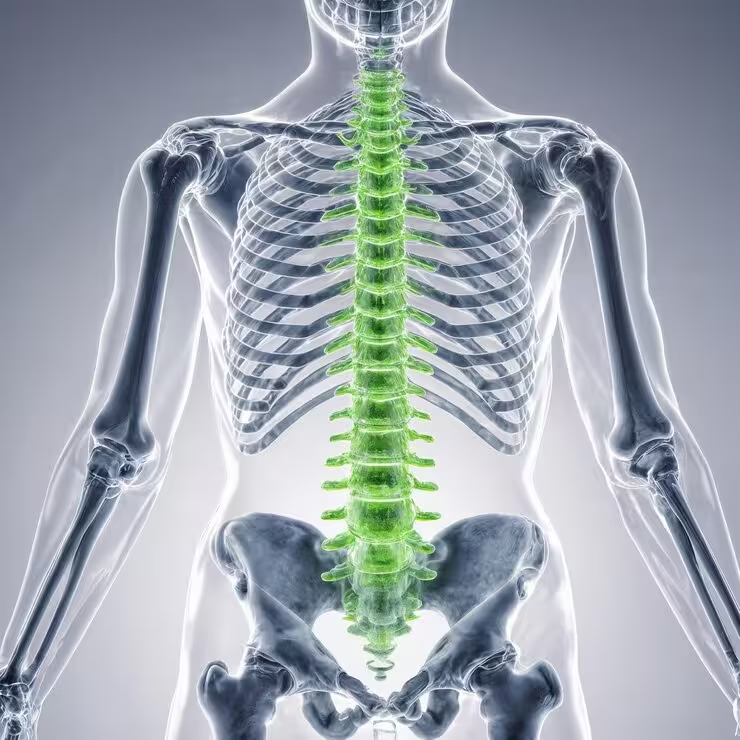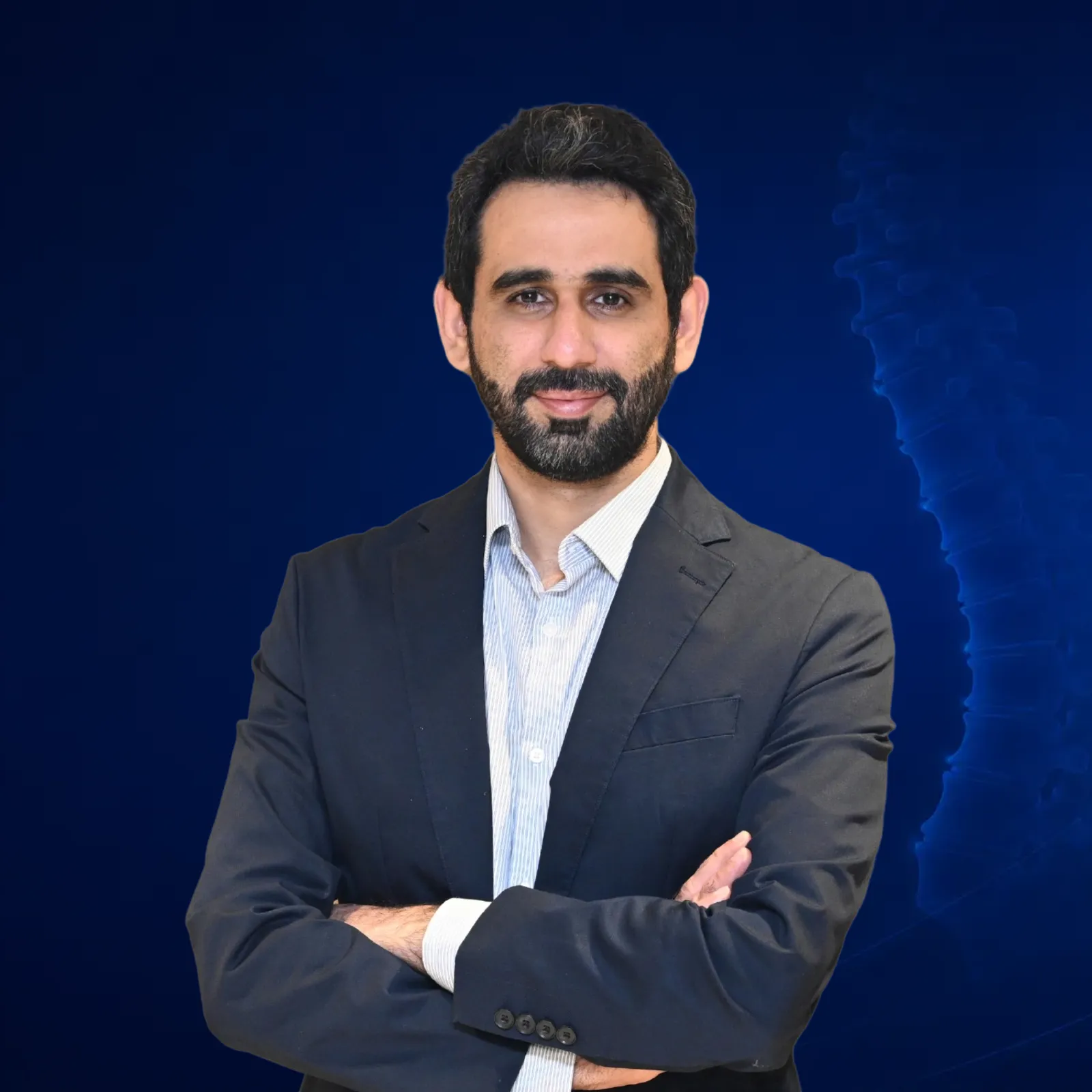
Sciatica causes radiating pain, numbness, tingling, or weakness travelling from the lower back down through the buttock and leg, usually resulting from nerve root compression caused by a slipped disc or spinal stenosis. Patients from Jind experiencing persistent or severe sciatica symptoms can consult Dr. Dheeraj Batheja in Gurugram for specialist evaluation and surgical care.
Patients from Jind can consult and receive treatment in Gurugram, not at a clinic in Jind. Treatment options range from targeted non-surgical management to advanced minimally invasive and endoscopic procedures when surgery is necessary.
Senior Consultant – Ortho Spine Surgery
Sciatica is not just simple lower back pain; it is a symptom of an underlying issue where the sciatic nerve is pinched or irritated. While many cases resolve with medications, physiotherapy, or targeted injections, persistent nerve compression can lead to severe discomfort or progressive muscle weakness.
When conservative care fails to relieve symptoms, specialized surgical decompression becomes necessary. Dr. Dheeraj Batheja utilizes advanced minimally invasive techniques such as microdiscectomy and endoscopic spine surgery to relieve nerve pressure precisely and effectively.
Sciatica occurs when the sciatic nerve is impinged. Determining the exact anatomical cause is vital to planning effective non-surgical or surgical management.
The most common cause of sciatica. When the soft inner gel of a spinal disc pushes through a tear in the outer wall, it presses directly against the adjacent nerve root, causing sharp leg pain.
Narrowing of the spinal canal due to age-related wear and tear, bone spurs, or thickened ligaments. This compresses multiple nerve roots, leading to bilateral or alternating sciatica symptoms.
A condition where one vertebra slips forward over the one below it. This misalignment pinches the nerves exiting the spine, triggering chronic sciatica and lower back instability.
Occurs when the piriformis muscle in the buttock spasms or tightens, compressing the sciatic nerve directly. While distinct from disc issues, it mimics true radicular sciatica symptoms.
Natural breakdown of spinal discs over time reduces disc height, which can lead to localized inflammation, bone spur formation, and secondary irritation of nearby nerve roots.
Arthritic enlargement of the small facet joints in the back of the spine can narrow the neural foramina (exit tunnels for nerves), resulting in nerve root compression and leg pain.
Surgery is typically considered when non-surgical treatments fail or when nerve compression is severe:
Certain neurological symptoms require immediate emergency evaluation and surgical intervention:
New onset of bowel or bladder incontinence or severe urinary retention.
Loss of feeling in the groin, buttocks, and inner thighs.
Sudden, severe loss of strength in both legs or rapidly worsening foot drop.
Precise identification of the compressed nerve root is mandatory prior to any surgical planning.
Detailed evaluation of pain radiation patterns, aggravating positions (sitting, coughing), numbness distribution, and previous treatments tried.
Straight leg raise (SLR) testing, deep tendon reflex checks, muscle power grading, and sensory testing to map exact nerve root involvement.
The gold standard imaging for sciatica, revealing exact disc herniation size, spinal canal width, and degree of nerve root compression.
X-rays rule out bony instability or spondylolisthesis, while EMG/NCS studies assess nerve conduction velocity when diagnosis is complex.
The gold standard surgical treatment for herniated disc-induced sciatica:
Cutting-edge keyhole surgery utilizing high-definition camera optics:
Dr. Dheeraj Batheja is an experienced spine surgeon and Senior Consultant in Orthopaedic and Spine Surgery at Artemis Hospitals, Gurugram, specializing in delicate nerve decompression and minimally invasive spinal reconstructions.
Extensive clinical background focused exclusively on diagnosing and resolving complex nerve compression disorders and sciatica.
A proven surgical track record encompassing microdiscectomies, endoscopic decompression, and complex spinal fusions.
Techniques centered on precision neural decompression with minimal tissue disruption, leading to faster pain relief and recovery.
MBBS (Maulana Azad Medical College), MS Orthopaedics (UCMS & GTB Hospital), DNB, MNAMS, MRCS (England), plus 2+ years of specialized spine training in the UK and an AO Global Spine Diploma.
Surgery is recommended only when clinically justified by symptoms and imaging, prioritizing non-surgical recovery when appropriate.
Recovery after minimally invasive sciatica surgery is remarkably fast. Most patients experience immediate relief from shooting leg pain, though mild surgical site soreness resolves over the first two weeks.
Patients from Jind seeking specialist sciatica evaluation and minimally invasive surgery can travel to Gurugram. Dr. Dheeraj Batheja does not perform surgery or run clinics in Jind; all consultations and procedures are conducted at Artemis Hospitals in Gurugram.
The distinction is clear: Jind = patient location, while Gurugram = consultation and surgical treatment centre. Patients from Jind City, Urban Estate, Narwana, and surrounding districts can easily access the hospital via NH-352 and NH-9 or NH-48.
Consultation and Surgical Center: Artemis Hospital Road, Sector 51, Gurugram, Haryana 122018
Detailed answers regarding sciatica surgery, microdiscectomy, recovery, and travelling from Jind to Gurugram.
Yes. Patients from Jind can consult Dr. Dheeraj Batheja and undergo advanced sciatica surgery at Artemis Hospitals in Gurugram.
No. His dedicated surgical practice is located in Gurugram at Artemis Hospitals. Patients from Jind travel to Gurugram for evaluation and surgical management.
A microdiscectomy is the most common and effective minimally invasive procedure, where the surgeon removes the herniated portion of the disc pressing on the sciatic nerve.
No. The majority of sciatica patients improve with non-surgical measures such as targeted physiotherapy, medications, and epidural steroid injections. Surgery is reserved for persistent cases or neurological deficits.
It is an emergency if you experience loss of bowel or bladder control (cauda equina syndrome), progressive numbness in the groin area, or rapidly worsening leg paralysis.
Most patients undergoing minimally invasive microdiscectomy or endoscopic surgery are discharged either on the same day or within 24 hours.
Yes. Early mobilization is encouraged, and patients typically begin walking short distances within hours of the procedure.
Bring all previous lumbar spine MRI scans (films or CD), X-rays, nerve conduction studies, and prior medical prescriptions.
Light daily activities can usually be resumed within 1 to 2 weeks, while more strenuous activity and heavy lifting are restricted for 4 to 6 weeks.
The consultation and surgical center is located at Artemis Hospital Road, Sector 51, Gurugram, Haryana 122018.
Persistent sciatica pain and nerve compression require expert surgical evaluation. Whether you need non-surgical guidance or advanced minimally invasive microdiscectomy, patients from Jind can consult Dr. Dheeraj Batheja at Artemis Hospitals in Gurugram for specialized spine care.
Consultation Clinic: Artemis Hospital Road, Sector 51, Gurugram, Haryana 122018